Choosing a mask for a child is not simply a matter of selecting the size marked “kids.” Faces differ widely, even among children of the same age. A loose mask can leave visible gaps near the cheeks, nose, or chin. A tight mask can press against the nose and cause discomfort during school, travel, or outdoor play. This guide explains How to choose the right mask size for children using practical measurements, careful observation, and reliable fit checks.
A useful principle comes from aerosol engineer Aaron Collins, known for independent mask testing: “Fit is everything.” His point matters because filtration performance depends on how closely the mask seals around the face. Measure from the bridge of the child’s nose to below the chin. Then check the distance between both cheeks. Use these measurements alongside the manufacturer’s size chart. Do not trust age labels alone.
Look closely.
The mask should cover the nose, mouth, and chin without touching the eyes. It should stay in place when the child talks, laughs, or turns the head. Ear loops should feel secure, not painful. Glasses should not fog heavily after adjustment. A child may need a different model, not merely a larger size. Reusable masks can shrink after washing, which is easy to overlook. Disposable masks may fit differently across brands. Even accurate measuring cannot replace a real-world fit check. Children should also be able to breathe comfortably and communicate clearly. Some assumptions will be wrong. Recheck the fit as the child grows.
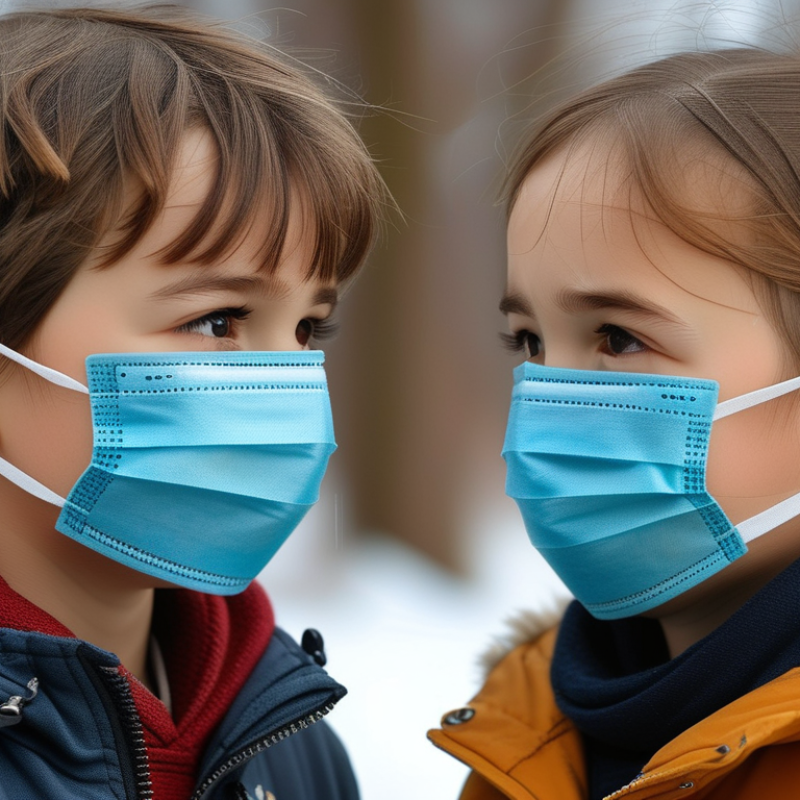
Identify a Child’s Face Measurements Using CDC Fit Principles
2026 Top Guide: How to Choose the Right Mask Size for Kids?
A child’s mask size should follow face measurements, not age alone. CDC fit principles recommend full coverage of the nose, mouth, and chin, with minimal gaps at the cheeks. Measure from the bridge of the nose to just under the chin. Then measure across the face, from one cheek to the other, without pressing the tape tightly. Record both numbers in centimeters. Small differences matter.
Children move. Measurements drift. Ask the child to smile, talk, and turn their head while wearing the mask. Check whether the top edge touches the nose bridge and the bottom edge stays under the chin. Ear loops should feel secure, never painful. Glasses fogging may indicate a nose gap, but it is not a perfect test. CDC respiratory-virus guidance states that better-fitting masks generally offer better protection than loose coverings. NIOSH also emphasizes that fit affects real-world performance, even when filtration material performs well in testing.
The Lancet’s 2020 systematic review examined 172 observational studies and associated mask use with lower infection risk, while noting that evidence quality varied. That caution matters for children. A mask can fit correctly at home, then loosen during school activities. I have found that checking after ten minutes reveals problems missed during the first fitting. Recheck the size after facial growth, weight changes, or repeated washing. A comfortable seal is useful, but comfort alone is not proof of protection. (Sources: CDC, Respiratory Viruses; NIOSH, Respirator Fit; The Lancet, 2020.)
2026 Top Guide: How to Choose the Right Mask Size for Kids? - Identify a Child’s Face Measurements Using CDC Fit Principles
Use a flexible, non-stretch measuring tape. Measure the child while seated, with a relaxed face and the head facing forward. These measurements help screen for a suitable size; the final choice must be confirmed by an actual fit check because mask dimensions and designs vary.
| Measurement or Fit Check |
How to Check |
Target Result |
What to Do |
| Face width |
Measure across the face from the widest point of one cheek to the widest point of the other cheek, passing across the bridge of the nose. |
The mask should reach comfortably toward both cheeks without pressing painfully or leaving open side gaps. |
If the mask ends too far inside the cheeks, choose a wider design. If it bunches or slides, try a smaller design or adjust the fit. |
| Face height |
Measure from the bridge of the nose, between the eyes, to the lowest point of the chin. |
The mask must cover the nose, mouth, and chin at the same time. |
If the chin is exposed, choose a longer mask or a design with a deeper lower panel. |
| Nose bridge position |
Check where the top edge rests when the mask covers the nose and mouth. |
The upper edge sits securely over the nose without blocking vision or sliding below the nose. |
Use a moldable nose area if available, and adjust it gently to reduce gaps. |
| Chin coverage |
Ask the child to speak, smile, and open the mouth while wearing the mask. |
The lower edge remains under the chin and does not roll upward during normal movement. |
If the mask rides up, choose a longer or better-contoured design. |
| Side gaps |
Look along both cheeks while the child breathes normally and turns the head. |
There should be no visible open gaps between the mask and the face at the nose, cheeks, or chin. |
Try a different size or shape if gaps remain. Do not rely on tying, taping, or unsafe modifications. |
| Breathing comfort |
Have the child wear the mask for several minutes while talking and walking calmly. |
The child can breathe comfortably and communicate without repeatedly touching or removing the mask. |
Stop use if breathing is difficult, dizziness occurs, or the child cannot tolerate the mask. |
| Ear-loop tension |
Check the loops after the mask is positioned correctly. |
The loops hold the mask securely without causing redness, pain, or excessive pressure behind the ears. |
Use a different size or adjustable fit if loops are loose or uncomfortable. |
| Movement test |
Ask the child to look left and right, nod, talk, smile, and open the mouth. |
The mask stays in place and continues covering the nose, mouth, and chin. |
Resize or readjust if the mask slips, exposes the nose, or loses chin coverage. |
CDC-based fit principles: A well-fitting mask should completely cover the nose and mouth, fit snugly against the sides of the face, and remain secure during normal movement. Children younger than 2 years should not wear masks. A child should not wear a mask if they have trouble breathing or cannot remove it without help.
Match Face Width and Height to the Manufacturer’s Size Chart
2026 Top Guide: How to Choose the Right Mask Size for Kids?
A child’s age is only a rough guide. Face width and height provide a more dependable starting point. Use a soft measuring tape, not a ruler pressed against the skin. Measure width across the cheeks, from one side to the other. Measure height from the bridge of the nose to below the chin. Keep the child’s face relaxed during both measurements.
Compare these numbers with the manufacturer’s size chart. Do not select a size by appearance alone. Charts differ, even when the labels look similar.
A mask should cover the nose, mouth, and chin without blocking the eyes. The edges should sit flat against the cheeks. Gaps near the nose or jaw can signal a poor match. Straps should feel secure, never painfully tight.
Check the fit while the child talks, smiles, and turns the head. Watch for slipping, folded edges, or frequent touching. In practical fittings, I have found that a slightly wider face can need a different size than height suggests. That result can feel surprising. Children also grow unevenly, so measurements need regular review. I once trusted an earlier measurement for too long. That was a useful mistake. Recheck after noticeable growth, and follow the product’s care and replacement instructions.
Check ASTM F2100 Filtration Levels: 95%, 98%, and 99% Performance
2026 Top Guide: How to Choose the Right Mask Size for Kids?
ASTM F2100 filtration levels help parents compare children’s masks more carefully. Level 1 generally requires at least 95% bacterial and submicron particle filtration. Levels 2 and 3 typically require at least 98%. These figures describe laboratory performance, not perfect protection in daily use. A 99% claim may come from a different test method or particle size. Check the test report before trusting the number.
Fit still matters. A highly filtering mask can perform poorly if air escapes around the cheeks. Look for a secure nose area, soft ear loops, and coverage from the nose to below the chin. The mask should not press against the eyes or make speaking difficult. Ask your child to breathe, talk, and turn their head. I have found that a smaller mask is not always safer; tight edges can create gaps.
Tips: Measure the child’s face from the nose bridge to the chin. Compare that measurement with the product’s size chart. Check for ASTM F2100 testing details, not only “95%” or “99%” printed on packaging. Replace a damp, damaged, or visibly dirty mask. Children may remove masks when uncomfortable, so comfort deserves honest attention. One detail is easy to miss: filtration results cannot replace proper fit.
2026 Top Guide: How to Choose the Right Mask Size for Kids
ASTM F2100 filtration benchmarks: 95%, 98%, and the commonly referenced 99% target.
ASTM F2100 minimum bacterial filtration efficiency (BFE) and submicron particulate filtration efficiency (PFE) are 95% for Level 1 and 98% for Levels 2 and 3. A 99% result may be used as a higher performance target, but 99% is not a separate ASTM F2100 classification. Choose a child-sized mask that fully covers the nose, mouth, and chin without visible gaps; fit and comfort are as important as filtration performance.
Verify EN 14683 Compliance and Bacterial Filtration Efficiency
2026 Top Guide: How to Choose the Right Mask Size for Kids?
A child’s mask should cover the nose, cheeks, and chin without pressing the eyes. However, size alone does not prove protection. Check the packaging for EN 14683, the medical mask standard, and the stated mask type. Type I requires at least 95% bacterial filtration efficiency, while Type II and Type IIR require at least 98%. Type IIR also includes resistance to liquid splashes.
Look for a clear test report, not vague phrases such as “high filtration.” The report should identify EN 14683, the mask type, bacterial filtration efficiency, breathability, and test laboratory. A 98% BFE result sounds impressive, but it does not guarantee a good seal on a small face. Gaps near the nose can reduce practical protection.
Fit needs a quiet check.
Ask the child to breathe, speak, and turn their head. The mask should stay in place without constant touching. Ear loops should feel secure, not painful, and the material should remain dry during use. In real-world checks, adults often focus on filtration numbers and overlook comfort. I have made that mistake too. A mask that meets the standard but causes repeated adjustment may perform poorly in daily use. Children should never wear a damaged, wet, or visibly soiled mask. Always follow the product instructions and replace it when needed.
Test Seal, Comfort, Breathing, and Movement Before Daily Use
Choosing the right mask size for a child starts with a seal test, not an age label. Ask the child to cover the mask gently with both hands and breathe normally. Watch for air escaping near the nose, cheeks, and chin. A mask that slips during speech or leaves visible gaps needs adjustment or replacement.
Comfort matters just as much. The child should breathe calmly, speak clearly, and move the head without pulling the mask away. Walk, bend, and turn for several minutes. Check for skin pressure, fogging, damp fabric, or repeated touching. The CDC advises that masks should fit snugly over the nose, mouth, and chin. Its respiratory protection guidance also notes that fit affects real-world protection, not filtration claims alone.
Test it during play.
Professional standards provide useful context. NIOSH filtration testing uses an airflow of 85 liters per minute, showing how strongly airflow can challenge a filter. ASTM F2100 evaluates medical mask performance through bacterial filtration, sub-micron particle filtration, breathing resistance, and fluid resistance. These laboratory results do not guarantee a child’s face seal. That is the part many caregivers overlook.
A practical check is simple: observe breathing and movement for ten minutes. Ask where the mask feels uncomfortable. Children may say “fine” while constantly touching it. I have found that fit checks are helpful, but they are not perfect. Recheck after washing, growth, or strap stretching. Children change quickly.
Conclusion
How to choose the right mask size for children starts with accurate face measurements. Measure the child’s face width from cheek to cheek and height from the bridge of the nose to below the chin, following practical fit principles that help keep the mask securely positioned. Compare these measurements with the manufacturer’s size chart rather than relying only on age recommendations. A properly sized mask should cover the nose, mouth, and chin without gaps or excessive pressure.
Parents should also review the mask’s stated filtration performance, including ASTM F2100 levels such as 95%, 98%, or 99%, and verify EN 14683 compliance and bacterial filtration efficiency where applicable. Before daily use, check the seal by observing whether air escapes around the edges, and confirm that the child can breathe comfortably, speak, and move without the mask shifting. The best choice balances reliable filtration, secure coverage, comfort, and easy breathing during normal activities.
 DrSharpe Health
